An Instagram or WhatsApp booking link that closes the loop
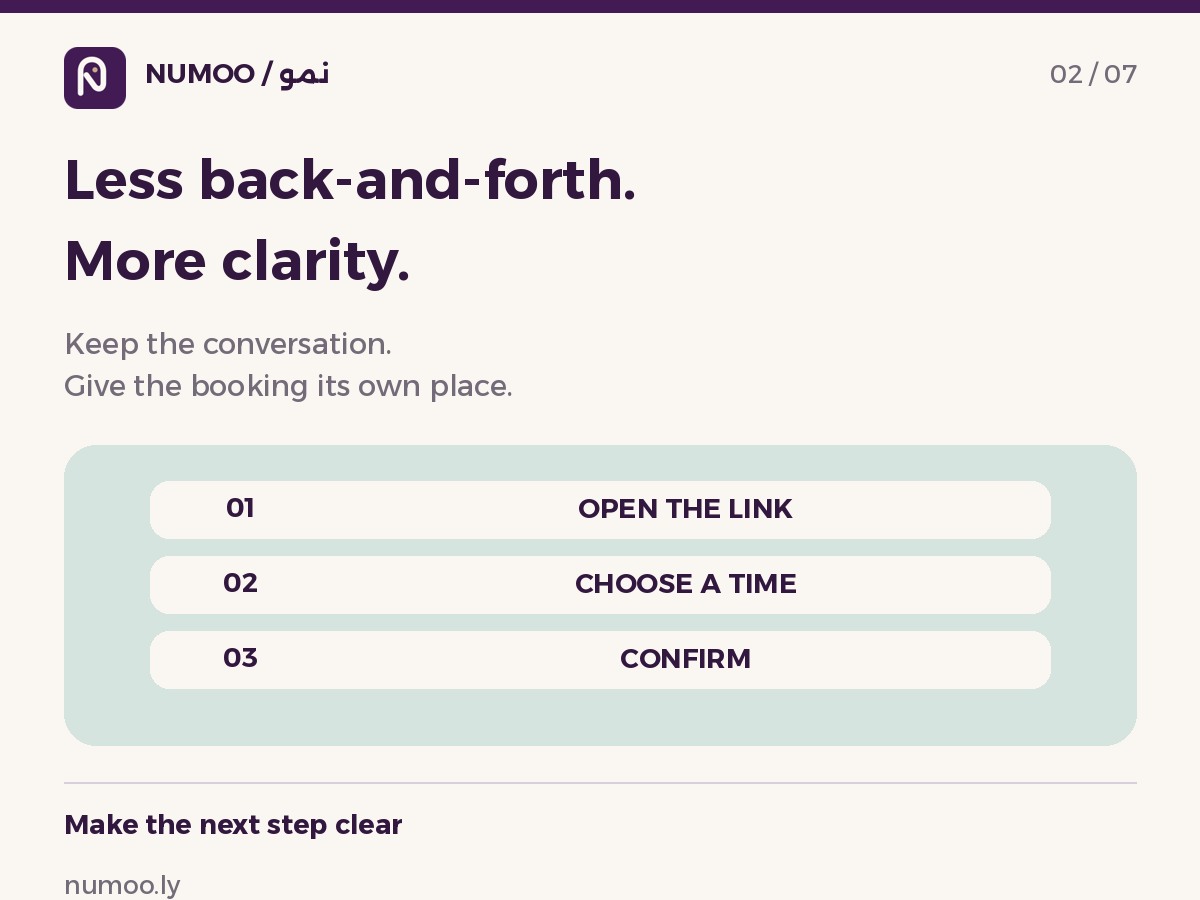
A booking link gives an interested customer a next step: choose a service and an available time without waiting for another reply. For a Libyan business using Instagram and WhatsApp, the aim is not to remove conversation. It is to stop repeating the same availability exchange for every routine appointment. Numoo provides the booking page; your team still handles advice, exceptions and the service itself.
Before you start
- Put the link where the customer is already asking about availability.
- Explain what happens after the click, including payment at the visit.
- Use clicks to diagnose interest and booking records to verify outcomes.
Fix the last step of the post
A useful service post tells a customer what the service is, who it is for and what to do next. “Message us” can work when the request needs discussion. For a standard service with a clear duration and price, a booking link can give the customer a more direct next step. Choose the route that matches the question rather than forcing every person into the same path.
Check the link on the actual device and app people will use. A mobile browser should show the correct business and language, a recognisable service name and a price the customer can understand. Avoid sending someone from a specific service post to a page full of unexplained choices. If you use a general business link, explain which service to select.
A saved reply should sound like your reception team
Write a short reply that acknowledges the question and explains the link. For example: “You can see available times and book here. Choose the service, then the time that suits you. If you need help choosing, send us a message.” Adapt the wording to your business and use the real business URL rather than a placeholder.
For Arabic-speaking customers, use natural language your team would actually say. Do not paste a long product description into a conversation about a haircut or a class. Keep the human option visible, especially when someone is unsure which service is appropriate. Numoo does not automatically read, answer or book from your private WhatsApp conversations.
Make the customer’s expectations explicit
Customers should know whether they are reserving a confirmed time, what the displayed total includes and how payment is handled. Numoo currently leaves payment collection to the business at the visit. If the post implies an online checkout or deposit, change the wording before promoting it.
Also explain any meaningful rules for changing the appointment. The booking-management link supports actions within your business rules, but a customer may still need help. Do not call the experience “frictionless” while hiding the contact route or cancellation conditions. The practical goal is fewer avoidable steps with enough information to make a confident decision.
Keep the diary consistent across channels
A person who calls reception should not be able to reserve a time that the online page has already allocated. Agree that every appointment enters the same operational schedule. If staff keep a paper note briefly while speaking to someone, define when it must be entered so the note does not become a second diary.
Explain the routine to every person who answers messages. A good booking page can still be undermined by a colleague promising a time without checking. Review a small sample of telephone, online and walk-in bookings during the first week to make sure the process matches the team’s understanding.
Measure the journey without confusing clicks with sales
Use platform-provided social metrics to understand reach, saves and link activity where available. Use a consistent campaign label on your marketing links if your measurement setup supports it. Keep names, phone numbers and booking-management tokens out of tracking parameters and public reports.
Then use business booking records to check reservations and outcomes. A link click is not a completed booking, and a booking is not proof of collected revenue. Numoo’s public-site analytics and private booking records have different scopes; do not claim automatic person-level attribution between them. If you manually ask how a customer found you, describe that as a separate source of information.
| Stage | What it can tell you | What it cannot prove |
|---|---|---|
| Post reach | The platform showed the content | Someone wanted an appointment |
| Link activity | Someone followed a next step | A reservation was completed |
| Booking record | A reservation was recorded | The person attended and paid |
| Completed visit plus payment record | The service happened and money was collected | The post caused every part of that outcome |
A small test for the next seven days
Choose one service and one clear call to action. Keep the price and availability accurate, then compare the questions reception receives with the previous routine. Note repeated obstacles: customers choosing the wrong service, not understanding an extra or being unsure where to go. Each obstacle suggests a specific edit.
At the end of the week, review the booking outcomes and the team’s coordination effort. Improve the confusing step before increasing promotion. If the link is easy to use but there is little interest in the service, changing the button colour is unlikely to solve the demand problem. Work on the offer and the audience as well as the booking page.
Common questions
Does Numoo book directly inside WhatsApp?
This workflow shares a link that opens the business booking page in a browser. It does not mean Numoo reads or automatically answers private messages. Your team can keep using WhatsApp for questions and provide the link for routine time selection.
Do customers have to install anything?
They can use the Numoo booking page in their browser. Test the link from the social app and device your customers normally use, and keep a human help route available for people who need assistance.
How can I tell whether a post produced revenue?
Compare the available marketing observations with booking outcomes and actual payment records, while acknowledging attribution gaps. Do not treat clicks or saved booking value as revenue. Use a clear measurement period and avoid claiming that every booking was caused by one post.
Put it into practice
This guide describes current product behaviour. Worked examples are illustrative, not customer results or performance guarantees.
Open the illustrated steps in the product guideMake the next step a practical one.
Set up one service and a clear schedule, then start with your business link.
Start your business page